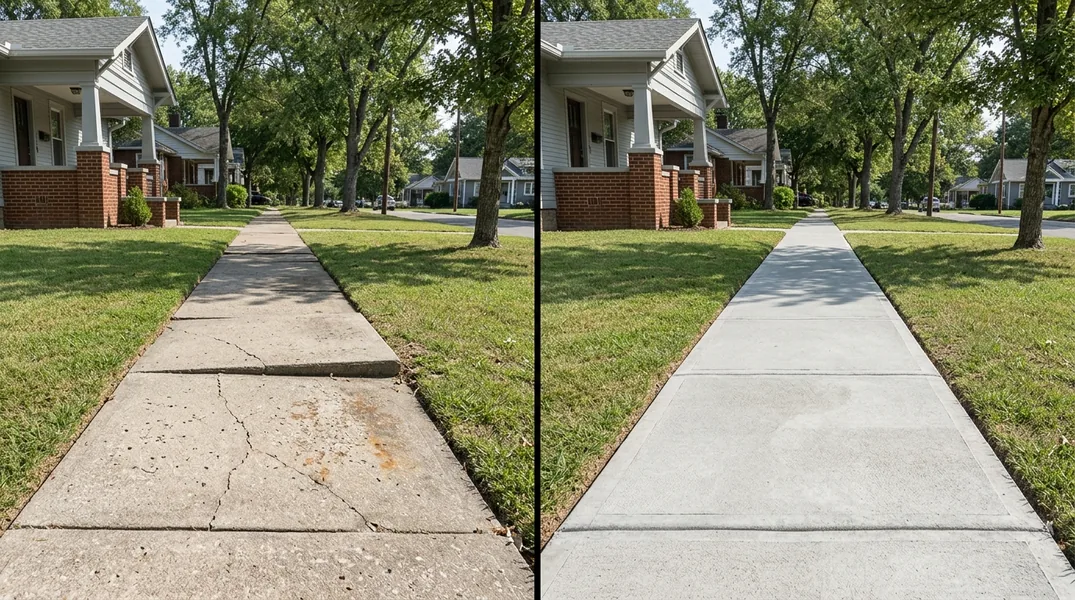
The Nashville Climate Challenge: Why Concrete Suffers Here
Nashville homeowners face a unique set of weather conditions that put constant stress on concrete surfaces. Unlike regions with stable, predictable climates, Middle Tennessee experiences a combination of intense summer heat, heavy spring rains, and occasional winter freezes that create a perfect storm for concrete damage. This isn't just about wear and tear; it's about the specific way our local climate attacks concrete from multiple angles throughout the year.
The problem starts with understanding that concrete isn't a static material. It expands and contracts with temperature changes, absorbs moisture from rain and humidity, and can develop micro-fractures that grow over time. When you layer Nashville's particular weather patterns on top of this natural behavior, you get accelerated deterioration that homeowners often don't anticipate. Many people install a beautiful Concrete Driveways and expect it to last decades without problems, only to notice cracks and surface damage within just a few years. Understanding why this happens is the first step toward protecting your investment.
Summer Heat and Thermal Stress: The Expansion Problem
Nashville summers are no joke, with temperatures regularly climbing into the low 90s and sometimes pushing toward 100 degrees. When concrete bakes under this intense heat, it expands significantly. This expansion wouldn't be a problem if it happened uniformly, but concrete doesn't expand evenly. The surface heats up faster than the interior, creating internal stress. The top layer wants to expand more than the deeper layers beneath it, and this competing pressure creates stress that the concrete can't always handle.
Over time, this thermal stress causes the concrete to develop hairline cracks that start at the surface and work their way down. These cracks might seem minor at first, but they're actually gateways for water infiltration. Once water gets into those cracks, it can freeze during our occasional winter cold snaps, expanding and widening the damage further. This is why you'll often see concrete damage Nashville homeowners report getting progressively worse through the seasons. The summer heat creates the cracks, and the winter freeze makes them deeper. If you've noticed your driveway or Concrete Patios developing new cracks each year, thermal stress is almost certainly playing a role.
Clay Soil and Driveway Cracking: The Hidden Culprit
One of the biggest reasons for clay soil driveway cracking in the Nashville area is the composition of the soil beneath our concrete. Much of Middle Tennessee sits on clay-heavy soil, which behaves very differently from sandy or well-draining soil. Clay absorbs water like a sponge during rainy seasons and then shrinks dramatically as it dries out. This constant expansion and contraction of the soil creates an unstable foundation for concrete structures built on top of it.
When clay soil expands from moisture, it pushes upward against the concrete with surprising force. When it dries and shrinks, it creates voids underneath the concrete. This cycle of heaving and settling puts your driveway through constant stress. You might notice that some areas of your concrete are higher or lower than others, or that cracks follow specific patterns across your driveway. This is classic evidence of clay soil movement. The problem is particularly severe in Brentwood and surrounding areas where clay content is especially high. Proper site preparation and base layer installation can mitigate this issue, which is why working with experienced professionals makes a real difference when installing new concrete.
Freeze-Thaw Cycles: Winter's Assault on Concrete
While Nashville winters are generally mild compared to northern states, we do experience occasional freezing temperatures, and those freezes can be particularly damaging to concrete. The freeze-thaw cycle works like this: water enters concrete through existing cracks or pores, and when temperatures drop below freezing, that water turns to ice. Ice takes up about nine percent more volume than liquid water, creating internal pressure that forces the concrete to expand. When the temperature rises and the ice melts, that pressure releases, but the damage has already been done.
This cycle is especially destructive because it repeats. A single freeze-thaw event might cause minor damage, but several cycles over a winter season can significantly weaken concrete. You'll often see scaling on the surface (where the top layer of concrete flakes away) or spalling (where larger chunks break off) following our occasional cold snaps. The damage is cumulative, meaning that concrete that survives one winter in decent shape might be noticeably worse after three or four winters of freeze-thaw cycles. This is why concrete repair Nashville Tennessee contractors stay busy in early spring, addressing damage that accumulated over the winter months. If you notice new damage after a cold spell, it's worth getting a professional assessment.
Signs Your Concrete Needs Professional Attention
Knowing what to look for can help you catch concrete damage early, when Concrete Repair & Resurfacing is less expensive and more effective. Early warning signs include hairline cracks that seem to appear suddenly, especially after a hot summer or cold winter. You might also notice that your driveway or patio is developing a rough, pitted surface texture, which indicates that the concrete is beginning to break down at the microscopic level. Uneven surfaces, where one section is noticeably higher than an adjacent section, point to soil movement beneath the concrete.
Discoloration and staining can also indicate problems. If you see areas where water seems to pool or where the concrete stays wet longer than surrounding areas, that's a sign that the surface has developed low spots from settling or heaving. Don't wait until these minor issues become major problems. Addressing small cracks and surface damage now prevents them from becoming expensive structural repairs later. If you're seeing any of these signs in your Nashville property, it's time to get a professional evaluation. Call Nashville Concrete at (629) 729-4150 to discuss what you're seeing and get expert advice on the best course of action.
Protecting Your Concrete: Prevention and Maintenance in Middle Tennessee
The good news is that you don't have to simply accept concrete damage as inevitable. Proper maintenance and preventive measures can significantly extend the life of your concrete surfaces and minimize the impact of Nashville's challenging climate. The most important step is keeping water off your concrete. Make sure your driveway slopes appropriately so that water runs off rather than pooling. Clean gutters and downspouts regularly so that water from your roof is directed away from concrete surfaces, not toward them. Seal cracks promptly, even small ones, because unsealed cracks are how water gets into the concrete structure.
Regular sealing of your concrete surfaces is one of the best preventive investments you can make in concrete care middle Tennessee. A quality concrete sealer creates a protective barrier that reduces water absorption and slows the damage from freeze-thaw cycles and thermal stress. Depending on your climate exposure and traffic, concrete should typically be resealed every two to three years. During winter months, avoid using rock salt on concrete surfaces if possible, as salt accelerates concrete deterioration. If you need traction, use sand or calcium chloride alternatives. For homeowners who want to know more about protecting their specific concrete surfaces or who suspect damage is already present, Nashville Concrete offers a free estimate to assess your situation and recommend the best maintenance or repair strategy for your property.
Looking for a professional tree service in Nashville? Nashville Concrete responds fast for all your concrete needs.
Get a Free QuoteOur services: Concrete Driveways · Concrete Patios · Stamped & Decorative Concrete